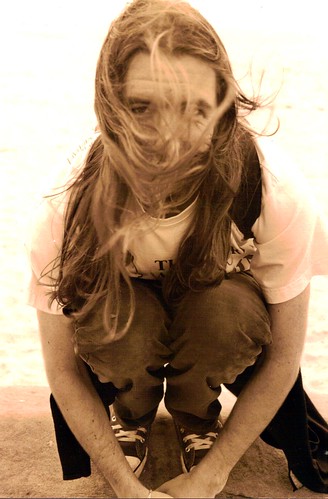
Thursday, 8 November 2007

Vinyl Diaries XII: Bill Callahan


Photo by fernando [pixelstains]

Bill Callahan
The Factory Theatre
Wednesday, November 7


If you're in or around Sydney and wondering what that low, humming sound is, you will find one Bill Callahan to blame. Weaving together painterly strokes of life, photographic snapshots taken through windows of strangers left open to catch the breeze, these misleadingly straightforward songs carry deep into the part of our minds that is responsible for our humming cords.

You'll have to excuse the mixed craftaphores above, but Callahan's songs seem to draw heavily on the visual as well as musical arts - subtle gradations of and shifts in colour, light and shading are of utmost importance.

With dark humour and a light touch he deftly opens our eyes to pockets of the world that exist mostly on the periphery of our vision (if at all), leaving traces of these lives indelibly printed on our hearts.

Having toured previously in solo mode as Smog and (Smog), this was the first chance to hear Callahan working with a band, drawing closer to the sounds of his prolific recorded output. The strength of their performance was quite remarkable given they were all local musicians, no doubt fairly hastily cobbled together for a short run of shows. On drums was the ever-more ubiquitous skinman savant Laurence Pike (Triosk/Pivot etc), with Tim Rogers (better known to most as Jack Ladder) on bass. The 'strings' billed for the show were fiddlers three, including Lara Goodridge of Fourplay.

Opening the set with 'Our Anniversary' from Supper, Callahan shares the droll tale of an anniversary night where the car keys have been hidden to keep itchy feet from fleeing:

It's our anniversary and you've hidden my keys
This is one anniversary you're spending with me


'Diamond Dancer' is an odd yet infectious little groove, and you know Callahan's into this ghost of Bowie number because his left leg does a little back kick from the knee - like that in a kiss on a bridge in a film you once saw.

And that's one point to mote about Callahan's music - it's odd. I suggested earlier it's an open window, but perhaps more accurately it's a fractured mirror. We're staring into it and while we may occasionally catch fragments of our own reflection, we're seeing, layered over this into a composite reflection of humanity, the lives of those beyond, the yet-met, the long-forgotten.

'Held' bounces in like the big old baby to which Callahan compares himself, the bass bumbling it along just so. It's a cheerful, smoky, Texas-flavoured chomp on a side of beef with lashings of sticky barbecue sauce.

This showier side warms the night up nicely, but the special moments are those that quieten, and a hush falls as the finger-picked opening to 'Teenage Spaceship' marks the first such moment.

Adept at turns of phrase that lift the corners of our mouths, Callahan lets the shell drop and twilight fall. You realise that while he looks closely at the audience between lines, drawing connections and truly appreciative for the interest, his eyes reflexively close as he sings each line. Though closed the lids remain wide - they're not clenched but veiled, alligator eyelids that he can somehow see through.

This twilight seems a natural fit for Callahan, reflective yet optimistic. The upbeat 'Sycamore' from this year's Woke on a Whaleheart pulls on the going-out boots, which we wear down to the stables for the rather insistent 'Let Me See The Colts'.

Throughout the ste, as those familar with his work would expect, there's something wonderfully soothing about Callahan's voice. He has a warm, mesmerising baritone that can't help but put you at ease. It seems drenched in honey, but even richer - royal jelly perhaps, a bee conspiracy.

Hand in hand with the loping, looping music it evokes autumn time and falling leaves, reds, oranges and browns, golden light under silver skies. He uses it beautifully in 'The Well', in which a foolish act spurred by frustration leads him to chance across an old abandoned well in the woods that demands to be yelled into:

I gave it a couple hoots
A hello
And a fuck all y'all

I guess everybody has their own thing
That they yell into a well


It's these moments in his story-telling that you think about your own life, its pace and direction and whether you are still in touch with enough of the simple things - when did you last let a river carry you in its current, how long since brambles nicked at your knee, what are you doing that can possibly match the joy of swearing down a well?

These questions and images travel with us as we weave down Callahan's river into b-side 'Bowery' and the haunting 'Say Valley Maker'

With the grace of a corpse
In a riptide
I let go


We let go too, feeling currents warm and cool cross paths. They steer us downriver into the splendid 'Bathysphere' where we reach the open mouth, our seven-year-old selves dreaming of life at sea, between coral, silent eel, silver swordfish.

"My home is the sea" we are assured... until, at the very end:

When I was seven
My father said to me
'But you can't swim'
And I've never dreamed of the sea again


That last line always slices like a knife - a twist in the tale that abruptly sends us crashing back to earth. Catpower's wonderful cover of the song on What Will the Community Think is perhaps more driven, hence a heavier crash at the end, but Callahan's near-whimsy in the lead-up makes it a more surprising turn.

We're now well and truly in the palm of his hands, so it's with tingly, overbrimming joy that I realise he has started playing 'River Guard', so minor and delicate a piece I had never dared hope it would make it to a live set.

But here he was, the prison guard with a heart of gold, sitting in the tall grass while his charges gain a rare glimpse of life as it could otherwise have been.

When I take the prisoners swimming
They have the time of their lives
I love to watch them floating
On their backs
Unburdened and relaxed


The gooseflesh he experiences later that night, standing on a cliff, watching wind rip the leaves from the trees, is the same we feel now, and that stays with us as he and the band leave the stage.

This is the Bill Callahan I love - that, if he retains a belief in his craft and his gift, could have him one day wearing the boots of Johnny Cash that no soul has been able to get near. He's got a long way to go and many more roads to travel (he's nudging 40), and may very well toss it all in for a back porch somewhere with lady-friend Joanna Newsom and a horde of shoeless mud-caked little people, but it's worth tagging along for the journey for as long as we're invited.

There is a truth, honesty and integrity to his stories, songwriting and performance that while not necessarily peerless, certainly stands heads and shoulders above the bulk of the singer-songwriter field. Which isn't to say we're privy to the full picture - there's more burbling beneath the surface than we've yet been allowed to discover; but in time...

To some, Callahan comes across as dispassionate, echoing Lou Reed in steadiness of tone and play with meter, but the passion is buried within and well worth scratching around to discover. At heart and adding to its likely longevity is a defiant optimism. It's small-scale and complicated by dreams that are a little beyond our reach, but it avoids all traces of resentment or bitterness. We see this in 'Hit the Ground Running' (not in tonight's set), in which he calls bitterness the lowest sin and paints a gruesome picture of the bitter man who rots within: "I've seen his smile/ Yellow and brown/ The bitterness is rotting down".

Returning to the stage, his foolish heart dives into the glittering 'Rock Bottom Riser', coming up for a breath of fresh country air 'In the Pines'. This gorgeous traditional song has a fragile moonlit beauty and a strange effect - anaesthetisising yet invigorating at the same time.

Closing out the evening, the upbeat near-jauntiness of the slide up the frets that is 'Cold Blooded Old Times' ensured toes would be tapped through the rest of the night, dreams would be hijacked with golden light-painted country cottages and days would be spent humming jewels from the treasure chest.

Having wondered what to expect of Mr Callahan finally stepping out from behind the Smog handle, there need have been no fear. The mask has dropped, the Smog has lifted; we are still in safe hands.

Tuesday, 30 October 2007

Vinyl Diaries XI: Radiohead - In Rainbows


Rainbows? Not exactly miserabilist material. But then neither, quite, have Radiohead ever comfortably fit the bill as moping marauders.

Posterchildren for the disaffected, perhaps, but those with at least a modicum of interest in the world beyond. While their albums have steered, at times, into near sociopathically paranoid territory, perversely revelling in android tendencies and industrial coldness, there’s always been a heart beating away in there – a tendency towards shedding the replicant’s tear.

Such has been their impact on the musical landscape since emerging from Oxfordshire in the early 1990s, a new Radiohead album can never simply arrive according to its own terms. The past rests heavily on each new outing’s shoulders, recent releases dealing with this by smashing any traces of a link with the past before they have a chance to find a foothold. It’s not a stretch to suggest that their 19997 opus OK Computer irrevocably changed the face of modern music, a multi-faceted monster that simultaneously tore the still beating heart out of the sickening rock beast and breathed new life into the decaying form.

The claustrophobic Kid A and its slow-burning late-born twin Amnesiac took a twist for the darker, while Hail to the Thief put the piano front and centre and ratcheted up the ice quotient, veering into a realm of electronic detachment and giving slightly too much rein to Thom Yorke’s maddened disconnect.

The long-awaited follow up was finally unveiled last week, a commercially courageous (yet ultimately savvy) decision to release it online without record label backing, with fans allowed to decide just how much they wished to pay. But gimmick or musical distribution model of the future, the simple and wonderful fact is 10 new Radiohead tracks are available, and in the context in which the band has always worked best – album form.

Opener 15 Step misleads with the electro-clap impulses of a semi-detached drum-machine, not a million miles from recent Yorke territory in last year’s solo outing The Eraser. But after Yorke drops a few vocal lines, the humans arrive in force. There’s an organic, jazz-flavoured licking from Jonny Greenwood’s crystal clear guitar, Yorke warbles through the next section over the top of Colin Greenwood’s bass murmuring along near-funkily, then, instead of a chorus as such, Yorke shimmers in as Jeff Buckley piped through a church organ.

Phil Selway’s complex beatkeeping breaks, snaps, crackles back into being – and then they’re gone.

Bodysnatchers swaggers in on a fuzzy, looping riff – an old-fashioned rock stomper that cuts through the skin, peels to the core of your being, appeals to emotional fraughtness rather than the intellect. It’s the long-lost missing link between Pablo Honey and The Bends, unapologetically abrasive and squallingly . Yorke’s in typical self-deprecating mode - “I’ve no idea what I’m talking about” - but the music just doesn’t back it up.

It thumps and stonks along on this rollicking rock plane until, suddenly, smack on the halfway mark, it tears headlong over the precipice – a gorgeous, bruising, soaring bridge bringing a quick run of shivers to the spine.

Has the light gone out for you?
Because the light's gone out for me
It is the 21st century


It's glorious, an unshackled freefall with the euphoria one experiences in a dream of flying, over far too soon and dropping you back into a squalling shambles of a noise-pit, hungry for more.

Avoiding the comfortable format of verse-chorus-verse, these tracks are being built in ways that seem a natural fit for the idea being expressed. The strongest point in the track is echoed throughout the album – occurring in the bridges, in which the extrapolation of the elementary ideas has taken place, taken hold, and the shackles are off. They, and we, are free to roam in this new place, a new space of imaginative freedom where nobody will laugh at you for falling.

Long-time live fan favourite Nude is the perfect comedown, wandering up a damp and dreary corridor with a ghostly passage of backsucking drums and Bjorky ooh-ooh-oohs, dropping away to reveal a bassline of Mogadon funk and gentle tacka-tacka-tacked drums, before Yorke’s echoing, plaintive, signature angel-whimper:

Don’t get any
big ideas
They’re not
gonna happen


Stripped back to blues-jazz flavoured guitar, vocals, bass and drums, it’s unadorned, warm-blooded, breathing, the human condition adrift in a cavernous darkening. Cue the sample wash, then Yorke’s first real soar skyward of the album – deliciously confusing, as it is with the word ‘sinking’. More oohs follow, then it’s gone.

Counted in on drum sticks, crystalline single guitar notes and then overlayed with handfuls of broken chords, Jonny Greenwood and Ed O'Brien's guitars tangling deliciously, Weird Fishes/Arpeggi is a bottom of the ocean swim through a tangle of lushly fecund reeds.

Again you actually picture a band, musicians playing to each other, for each other, chancing across the magical chemistry that has kept them yearning, stitched together for nigh on two decades. It’s the second track in a row that wouldn’t have found space on any of the last three albums, the mood too open, too natural, and one feels that Yorke’s solo album has freed up the band to explore new territory together, free of the electro-clinical albatross his dabbling was threatening to offer their exposed necks. It's not that the push towards these cold new boundaries wasn't welcome - it was an essential part of the Radiohead experience - but that it was threatening to become something of a new orthodoxy.

As the track progresses we’re sinking into the deepest ocean, drifting to the bottom of the sea. Yorke’s projecting out into the fish, but also drawing us with him. We’d be as crazy not to follow as he felt he would be, so we all weave amidst rocks phantom and real, perhaps searching for the near-mythical coy koi upon which Frank Black once chanced while on holiday from his mind.

This joyous underwater dive gets us three quarters of the way through, before we realise we really should have gone up for a breath much much earlier. It’s far too late now, and carried along by a sudden change in current, bright explosions in our mind as the oxygen entirely depletes in the form of the spangliest guitar undertow since Johnny Marr was but a Smith, we hit the bottom.

The track shimmers and glitters some more, light shattering as we look back through the ocean’s surface, absent-mindedly running our fingers against our scales and so comfortable in our new gills we don’t even wonder about them. Hidden at the very end, buried in the sand like a sunken gold sovereign, we hear Yorke’s chest voice, the rarely offered baritone we nearly never encounter these days, an alter-ego to the alter-ego reserved for a disarming dropping of the guard.

From the sea we travel into space, All I Need an open-sky odyssey that has Yorke waiting in the wings as angelic synths roll in, rippling around the growling, purring bass. It is a stripped back work of breathtaking beauty and heart-rending fragility – it’s Radiohead as the battered, heart-on-sleeve, baffled romantic, laying it all on the table for the world to see. Glistening glockenspiel gives it a bright innocence, until, once more, the safe ground crumbles beneath our feet and we’re thrust, along with handfuls of loose piano chord tumbles, into an Icelandic abyss reflecting a glacier blue hue borrowed from Sigur Ros.

Just as abruptly we’re tipped into Faust Arp, a strange, finger-picked acoustic guitar and string-swept folk-tinged affair. It’s modern folk yet without the psych or the freak, Nick Drake gone Mersyside.

Through headphones or well-spaced speakers the urgent coruscations of Reckoner offer disparate pieces playing in each ear - the left offering a 60s, Byrds inspired pop affair of tambourine and assorted other shakery, the right offering brilliantly broken beats and clangy cymbal stumbles. The two seemingly incompatible halves are allowed to drift in and out of their own parallel universes until the bass burbles in and the drums follow its looping bumble, the whole wonderful mess eventually sutured via plaintive falsetto, Yorke relishing his Dr Frankenstein stitching together of an album highlight.

The strings sweep back in for the bridge, the drums having dropped out to give them room, before all the goodies that have reared their head until now return. Divine melodies and optimistic progressions give it an air of hope, a move from minor keys into a more positive space than they may ever have inhabited.

This mood sticks around for House of Cards, yet there is ultimately something a little flat about the whole affair. It’s worthy enough in its own right, but too easily dealt with by that handful of dangerous tags – ‘pleasant’ perhaps being the most concerning. It drifts past without drawing the usual emotional response – there’s none of the sting in the tail we have come to crave. Perhaps it’s a grower, but I fear it’s a skipper.

A timely save comes with Jigsaw Falling Into Place, a rhythmically driven exhortation to ‘let it out’ and to dance - to dance the dance of the damned perhaps, but at least a dance to remember, a blunt instrument propelling us all gleefully along the road to ruin.

Album closer Videotape is the most pianofied track of the whole journey. Resting on a simple drum tack-boom, there is a pearly gate optimism difficult to recall anywhere in the Radiohead ouvre. Perfection is contemplated and – surprisingly - accepted .

No matter what happens now
I won't be afraid
Because I know today has been
The most perfect day
I’ve ever seen


Doubled piano chords high and low, tight drum rolls and stuttering tacka-tacks keep the space contemplative, the final lines echoing in our minds, a most un-Radiohead-like sentiment metronomically dropped and indelibly imprinted on the psyche as In Rainbows fades to black. The pot at the end of the rainbow reveals not gold as such, but life as it can be, a dream made real because, let’s face it, it’s there for the taking.

Surprising in its lack of grand gestures, histrionic propulsions and dramatic flourishes, there is a refreshing honesty throughout In Rainbows that is in reflection quite exhilarating. It is perhaps most groundbreaking in the sense there’s nothing groundbreaking about it at all. It doesn’t smash its way through, it doesn’t reinvent a wheel. It’s a band, five no-longer-lads from Abingdon, in love with music, perhaps even life, shamelessly, guiltlessly, displaying that love for the world to see.

The feeling is not that they are playing safe, but playing true. Muse can keep the overwrought drama queen territory they’ve carefully mined, Coldplay the syrupy hollowness over the emotional equivalent of a scraped knee. This newfound territory for Radiohead is both more moribund but – because of it – more true to life. It’s British but not the stiff upper lip; it’s the awareness of class, of difference, of struggle – personal and social – but with a newfound celebration of what can exist alongside and within all of that. If someone wants to be fitter, happier, and do so in a way at which they may once have reflexively sneered or despaired, they will, for now, be let be.

It’s not a return to any earlier stage, nor is it a complete exorcising of their last outing. Yet it’s undeniably, quintessentially Radiohead. The most striking thing is they seem comfortable in their own skin, finally happy to accept they are what they are and, as such, they have produced an unapologetic Radiohead album, soaked in the toys with which they love to play, the feints and glancing blows against normality in an unthinking sense, in favour of an aware position, an understanding of self in relation to a wider picture.

We don’t need to stop the fight for what we believe in, but we can occasionally let down our guard, smile at what we love, touch what we cherish, revel in the golden rays of sun peeking from beneath the approaching (or passing) storm.

Friday, 19 October 2007

The Music Box: Chapter Fifty-One

Emily had to get out. Somewhere in this book, she knew, must lie the answer to how she could get her life back on track, undo the damage she had done by going behind her mother’s back and seeking out the music box from Aloysius Crouch, knowing all along that it wasn’t the right thing to do.

She realised she was getting nowhere by simply being angry at herself for having led them all into this mess. She had to come up with a way forward and dwelling on the past was not going to help.

Placing the book in a pocket inside the coat, she looked around to see if there was anything else that might prove of any use. It was all pretty much as she remembered it, although something further down the bench did catch her eye. She wondered if it had been there the first time – a round, wooden, tubular device that looked like a small telescope.

Emily walked over and gingerly picked it up. It felt quite heavy for its size and as she turned it over in her hands, she saw that it did have an eyepiece – perhaps it was a telescope after all? On closer inspection it seemed more like a kaleidoscope, a glass dome perched at the other end.

Emily raised it to her eye, but couldn’t make anything out. She began to wonder what Crouch used it for and was startled to find his image suddenly appear. She almost dropped it, but realising he wasn’t in fact in the room she managed to keep him in sight. She watched as he picked up the device, placing it to his own eye, twisting it around for a few moments, then making some notes in his book with his quill.

Emily’s mind turned to Minerva, and Crouch’s image slowly faded to be replaced by that of Minerva at home in her subterranean sanctuary, deep in discussion with both Topkinses.

Lastly, Emily pictured her mother. As Minerva disappeared from sight, her mother replaced her. She looked happy and well, working on the garden of their home. Emily knew the image could be coming from any time, that she couldn’t be too certain that all was still okay, yet she felt a reassurance at having at least seen her mother after what felt like so long away.

She placed the ‘spyroscope’ (as she thought of it) in another coat pocket and turned for the door. There was much to be done and Emily had to get somewhere she could think.

***

Emily opened the door and stepped through into the empty shopfront, better able to see it than her first time through, her eyes far better adjusted to the gloom.

She saw now the shop must have once been a toy store. Along the wall there still remained shelves that held a few spinning tops, some books and a few troubled looking dolls. Emily wondered what those dolls must have seen, who they may have witnessed coming and going from this place, what secretive business they were here upon.

Making her way to the front door, Emily turned the handle and was shocked by just how bright it was outside. She lost her footing as she stepped over the threshold, not noticing the street was a little below door level. Her hat tumbled off her head and rolled a little way down the street. Leaning down to pick it up, she was surprised to see Trixie Sopworth, a girl in her year at school.

“Trixie!” she exclaimed before thinking, so pleased to see a familiar face after all this time. She realised her mistake just as she saw the petrified look in Trixie’s face. To be addressed by Mr Crouch would have been bad enough, for him to know your name would be truly terrifying. She knew there was little she could do to allay Trixie’s fears so she quickly dusted of the cap, placed it on her head as she regained full height and stepped quickly down the street.

Emily knew she was heading the wrong way, but catching a fresh waft of the harbour, she knew this was the place to go to clear her head and work out her next step. Passing the last of the street’s shops, she stepped out into the cobbled road, passed the whitewashed Pig and Whistle inn with its gently swinging sign and turned the corner, a blast of sea breeze stinging her eyes as she stepped onto the rickety pier.

Sea birds hovering nearby took off as she neared, their soft white feathers fleeing from the black coated intruder, circling warily and keeping a safe distance. Their harsh throaty cries layered and built with neither rhyme nor reason; a messy noise far from that of the tuneful twittering of those living further up the hill in the glens and dales she would occasionally wander when given free rein to disappear for the day.

She had often wondered at the life of the sea birds and how different it was to their cousins up the hill. They were separated by only a mile or two, but their worlds could not have been more disparate. The sparrows and starlings seemed to Emily very much home bodies. They may dart and dash here and there and poke about for bugs and worms when hungry, singing out their lovelorn whistling at others, but she knew they spent much of their time attending to fairly domestic duties, improving their nests, picking for it choice twigs and preparing it for laying.

Their colouring was complex – mottled, speckled, browns and blacks and reds and yellows and blues, while no two of their songs ever seemed the same.

These sea birds, on the other hand, the gulls and terns and cormorants, were almost uniformly black, white or grey. While they would hover in the same places, it never seemed to Emily that this was home. It was certainly their territory – Emily had seen some quite territorial behaviour by certain characters – but it seemed more like a marriage of convenience to a location that supplied them with enough fish scraps to fight over than any true link with the place.

Their cries seemed so base, greedy, always warnings rather than greetings, spiteful rather than playful.

She wondered at how little interaction there was between the two worlds, how rare it had been to see these sea birds up in the hills. Occasionally she would see them soaring high above them, but never landing and exploring, showing any curiosity about this green and brown world so differently textured and populated than their own grey and blue.

Once she had seen a lone sparrow hopping along the shoreline, as though looking for something it had lost – little sparrow spectacles or such. As the waves crashed into the beach and the suddsy wake washed up the shore, the sparrow looked so out of place, so dwarfed by the sea, she suddenly feared for its safety. It must have been innocent to the sea’s power, her ability to spring a fatal surprise as easily and thoughtlessly as a person might sneeze.

She watched it travel further and further up the beach, losing sight of it before she could be certain it would be able to return home safely. She wanted to follow it, to make sure it was okay, but knew she had to let it be, do its own thing regardless of the consequences.

Before this she had thought the sea birds somewhat simple and lacking in the charm of the hill birds, but seeing the sparrow up against the sea she realised she had been looking at the sea birds through unfair eyes. Now she saw their inner grace, the way they danced and tussled with the sea, the manner in which they were effortlessly at ease with her, in tune with her rhythms and pulses. She would watch them glide along invisible currents and soar with the updrafts, now almost disdainful of the hill birds and their nervous, stuttering flights that seemed in contrast so random, at odds with nature rather than one with her.

She never failed to thrill at that moment, that brave flash of courage and certainty, when they would soar up, up, up, and then plunge – a vertical missile ploughing through the sea’s barrier at break-neck speed, a precision dive that penetrated the unknown.

Emily had by now reached the end of the pier. She sat with her side resting against a white painted pylon, dangling Crouch’s long, thin legs from under the coat over the edge of the drop. The wind was a quite solid gale, lifting spray into her face as she kept her eyes open, smelling deeply of its freshening promise. There really was no better way to clear the mind, scour the jumble of thoughts and fears, except perhaps to plunge into her depths, feeling the buffeting waves tumble and toss you, all your thoughts spent on breath and survival and leaving no room for day-to-day trivialities.

While she longed painfully to run up to her home, throw open the door and confront Crouch for his wrongdoings, Emily knew this approach was impossible. She could try explaining to her mother what had happened, but how would she even get her to listen, let alone have any chance of convincing her?

And even if she did, what of it? She was still trapped in Crouch’s body, Crouch in full control of hers. There was no way she could ever hope to have her old life back if she lost her chance of drawing Crouch back to his chamber, finding a way to swap their bodies back. Emily closed her eyes, letting the sound envelope her. There was a guilty pleasure in all this, knowing her mother rarely brought her down to the sea.

She loved it here and she would often wonder at why they didn’t spend more time down by the harbour, or further along the coast where the village tapered out and only a few rough shacks, inhabited by silent, bearded men, shirtless, linen pants held up by a rough twist of rope around the waist, seemingly forever drunk on salt and sun.

Emily took a deep, salty breath, reached into her pocket, took out Crouch’s book and began to read.

Monday, 8 October 2007

The Music Box: Chapter Fifty

A slanting diamond of sunlight framed by the window rested on the kitchen floor. Isabelle wondered what would happen if one stood in it for too long; if the floor might open up and whisk you away, closing behind as if you had never been.

Going back over her dream of last night, a dream that hung in the air this morning like her own personal rain cloud hovering over her own head, she wondered at what it all meant.

It was true that she hadn’t had as much time to spend with Emily lately. While Percy worked by day and finished his book by night, a study on bird life that had received interest from a publisher he had met quite by chance passing through Seaforth, she had been working overtime to keep the house in order.

Percy, meanwhile, had been distant for some weeks. It wasn’t that he was deliberately avoiding them or anything like that, but even when he was there, at the dinner table or on their evening walks, you knew his mind was really in his papers, worrying over a wingspan or a flight pattern or a nesting habit.

Isabelle was immensely proud of Percy and his work, but she nevertheless felt a terrible loneliness when he was in his writing and sketching frame of mind, detached from her and impossible to form a connection. Emily always seemed to take it quite well, seemingly understanding that what he was doing was quite important to him.

The creaking door brought Isabelle back to her senses. Stepping carefully through the doorway, Emily shuffled through into the kitchen. In one hand she was holding a boar-bristled hair brush, in the other a length of buttercup-yellow ribbon. The way she held them out towards her mother seemed almost a peace offering, which Isabelle took it to be since Emily hadn’t come to her to have her hair brushed for a long time.

Wordlessly, she took the proffered brush and began stroking it through Emily’s hair. A pang of tenderness made her heart flutter. All her anger of last night began to dissipate. Isabelle thought back to when she was Emily’s age, the impossibility of relating with her parents, the troubled childhood that their chilly indifference to her existence entailed.

She wondered, not for the first time, what had happened to that fierce, independent spirit. Her family life was in many ways ideal – Percy was a loving, considerate, caring man; Emily was a bright, intelligent and generous daughter. They made ends meet and lived in relative comfort, certainly more so than she had ever imagined possible as a child.

Yet somewhere along the way, with all her needs met and a comfortable, untroubled life, something of her essence, her fire, has been snuffed out.

When the wolf had appeared at the window, everything changed. What had scared Isabelle most, what had terrified her more than the prospect that the wolf would enter the house and devour her, was the frisson of excitement that she felt, the sense that, finally, something was happening in her life again.

She did not dare admit anything like that to poor old Percy, particularly because she was unsure herself what it even meant. Spying Aloysius that night – for she knew it could be no other – she was given a glimpse into a world that could have been hers. She knew, of course, it was not a world for her, that she had followed her heart and that she loved Percy and Emily more than anything in the world, but it was nevertheless a shock to discover in herself these strange feelings of ambivalence to this life and an uncomfortable attraction to the danger of the unknown.

This had all messed with her fragile mind terribly and she put up little resistance to some time away to regather herself, relieved to be away from the scene of her encounter.

“Mother?”

“Yes Emily dear?”

“Tell me what you are thinking.”

Isabelle realised she had been brushing Emily’s hair in the same place over and over, quite absentmindedly. She reached for the ribbon and looped it underneath, crossed the ends and formed a quick bow.

“Oh, nothing particular,” Isabelle said in what she hoped was an off-hand fashion.
“Just thinking about what we might get up to today.”

Emily put her hand up to her hair, felt the ribbon in place and turned around.
“Mother?”

“Yes dear?”

“I’ll help you with anything you like today. But can I ask you one thing?”

“And what’s that?”

“Tell me about your time living in the woods.”

Thursday, 4 October 2007

The Music Box: Chapter Forty-Nine

Emily sneezed. She was shocked to hear the sound it made, a rough, deep noise far from the dainty ‘atchoo’ to which she was accustomed. It reminded her of the task at hand. Alone, her thoughts twisted and tumbled and she found it difficult to put them into order. She looked around, her eyes now accustomed to the gloom, settling on the bench across the room. Striding over, Crouch’s coat billowing behind her with each step, she reached the bench before knowing quite what drew her. There, lying closed once again, was the book she had earlier spied:

Metaphysical Marvels and Unlocking the Unknown:
A study by Aloysius Crouch


Reaching out, her fingers softly traced the hard leather cover. She lifted it, her nose catching its musty, inky, bookish smell. Opening to the first page, her finger tracing the curve of Crouch’s neat looping script, she began to read.

It is here that I begin. Until now, there is nothing. After now – everything. The past is already forgotten. It never happened. It belongs in the dustbin of history, so much rotting horse-flesh, a broken vase that cannot hope to hold even a semblance of life, for the decay of its own demise has already overtaken the living, already stamped on each and every one of us the foul stench of defeat. Defeat at the hands of time, of the unswerving march of the flesh’s weakening.

I will not allow this to happen to me. I have too much to do to allow this pre-ordained defeat to diminish my grand plan.

There is, in this life, one chance given to us all. Most never truly grasp the moment when it arrives. But not me. My moment has arrived and I have taken it. I have the will, the need, and now the means to reshape this seemingly unbendable trajectory.

I will bend time to my own will. I will dictate how it moves, where it goes, what it allows to happen. No longer will it shape me, tell me what I am. I am in command. I will prevail. It is here that I begin.


Emily had to stop reading. The forcefulness of the passage had left her winded, a powerful blow that stopped her breathing. She wasn’t really sure what Crouch was on about, but more unsettling than the content was the sheer, naked vociferousness of its thrust, a brutal and unflinching hunger that felt distinctly at odds with nature.

Crouch was clearly determined to go to any lengths to pursue whatever twisted plans he had in mind and Emily was unsure as to how she could possibly hope to have any chance of coming up against such a man, of triumphing in the face of such a single-minded and calculating foe.

Forcing a deep breath, she read on.

I deny history but I hold on to what I have learned. That is this: Man is the greatest contradiction. So powerful. So weak. So capable. So inadequate. King of the jungle. At the mercy of all beasts.

It needn’t be this way. This weakness can be stripped away, this inadequacy banished to the pyre. Man can learn much from the beasts that show no mercy. Mercy is for the weak, the foolish, the misguided. To do so, Man must turn to the beasts that hold the secret of what he can be. There is much to admire in the lion, the jackal, the panther. But there is one beast above all that can open the door to understanding for Man, that can unlock the answer of how to be everything he intends to be.


Emily knew what must come next. She cast her mind back to what she had seen in the forest, the encounter between her parents and the wolves, the way her mother had saved her father all that time ago. An image of Aloysius burned brightly in her mind, quite literally – rimmed with fire, his very fur glowed with the intense heat of unbridled passion, aflame with his hunger.

She saw now what she had not seen the first time, the way he looked at her mother, the way the whole show seemed to be for her benefit. If he had thought she would be impressed he was severely mistaken – this brutality and blatant flaunting of power against the prone figure of her father had instilled in her mother an icy regard for Aloysius, while further cementing her love, care and affection for Percy.

Forced to risk everything to protect him, their hearts held so close to each other against a common threat, they began to beat as one. From that moment forward, there was no question of their separation. To be apart was to attempt the impossible – to be without their own heart.

Though she knew what was to come, Emily returned to the book. She hoped to glean at least some idea of how Crouch’s mind worked, to draw from his writing a hint of the man beneath the mask. The more she read, the more worried she became, but she knew she must go on.

The wolf has no contradiction. It is only what it is. It is power, hunger, need. It can be trusted for it holds no store in trying to be anything but what it is. The fox will wile, the hyena wait. The wolf will be itself, at all times, acting in its own immediate interests and answerable to nothing but its own hunger.

There is much to admire here, much to learn. Man, so distracted by notions of morality and social acceptability, has buried his true self. He is much closer to the wolf than he is prepared to admit. Man and wolf are born almost the same, yet from there everything is done to change Man from what he truly is. The wolf has no such shackles put on him and is free to be what he was born to be. Man, meanwhile, is made weak, compliant, shaped to believe that he is no better than his fellow, need want nothing more than what it is decided he should have.

I will change this. I will make Man everything he can be. I will learn to be Man from his closest cousin, I will run with the wolf and relearn how to be what I know, deep inside, I already I am. I will be reborn as myself, as who I was always supposed to be.

Robbed of this self for so long, stripped of my true being, I denounce all that has come before. History is dead. It is here that I begin.

Friday, 28 September 2007

The Music Box: Chapter Forty-Eight

Isabelle woke with a start. Her unsettled sleep had been even more fatiguing than having been awake, suffering under the weight of exhausting, messy dreams. She didn’t want to remember them, but they were too fresh, too clear to avoid.

She was out on the sea in a small wooden rowboat with Percy and Emily. It was a calm day, the three of them sharing in the peace and tranquillity that can only be felt without the distracting influence of landscape. Gently bobbing on the slightest of swells, the sun was shining, the sky a deep blue perched atop the emerald ocean and a restful spirit hung lightly in the air.

Without a word, Emily stood up. She smiled at her parents, waved her fingers in a gentle farewell and stepped delicately over the edge of the boat. Isabelle watch in frozen terror as her daughter plunged into the sea, disappearing below the green surface. After a few moments passed she caught sight of Emily’s white dress billowing on the current and was relieved to see she was coming back to the surface. Emily broke through and reappeared where Isabelle could see her, her hair plastered to her head. She opened her eyes and looked into her mother’s, peaceful and free of the anxiety that one might have expected.

A trace of a smile played on the upturned corners of her mouth. She kept her eyes on her mother as she slowly began to drift away. Isabelle was unable to act as she wanted. She was prepared to leap into the sea and wrap her arms around her daughter, paddle her back to the safety of the boat, or sink quietly with her if need be, but for some reason she was simply unable to move. Emily had been quite near at first, but now drifted further and further away. Girl and boat seemed to be answering to two separate flows, cross-currents that tore the daughter from her mother’s life.

Isabelle turned to Percy to prevail upon his fatherly love to save Emily, but the same near-smile danced upon his lips as it had on the daughter’s. Isabelle was confused as to why he wasn’t helping, hating his indifference to his daughter’s fate, but also curious as to whether perhaps he knew something about what was happening that she didn’t realise.

Snapping out of her frozen state, Isabelle took to the oars. She rowed and rowed as fast as her slight form could, Emily drifting tantalisingly close, yet also too far for her to seriously believe she could reach out and draw her back in.

Long into the afternoon she rowed, while twilight soon smeared the sky with pastels stolen brazenly from the orchard. She rowed through until the stars in the sky seemed to outnumber the drops in the ocean. She let them guide her, for now she could not see Emily at all. She knew she was still nearby, but had to take the whispered word of the stars for it.

It was from this starlit striving that Isabelle woke, in naked despair that she had not reached her daughter before waking. It felt like a terrible omen, despite being only a dream. If only she had slept long enough to get Emily back in the boat.

Isabelle wondered at what had woken her. The wind was howling, but that wasn’t it, there was nothing unusual about that at this time of year. As though her question had summoned an answer then and there, she heard it again – the footfall in the hall that must have woken her from her uneasy passage through the night.

It sounded like someone was very carefully making their way down the creaking hall. She heard more footsteps, and one final creak just outside her bedroom door.

Isabelle waited for the crack of light to appear, for the door to swing open and reassure her that her daughter was indeed safe and well. But there was no light, the door remained closed. Isabelle realised she was holding her breath – the covers were pulled up to her chin, but her ears remained attuned to hear the faintest trace of sound.

An interminable time passed, then she heard the creak of the hall again. The footsteps were in retreat, heading towards Emily’s room. The mother pictured her child returning to her own bed, having decided in some internal struggle against turning to the comfort of her parents. Isabelle turned to the window, but shut her eyes tightly when they saw the stars, a painful reminder of her draining, horrible dream.

Wednesday, 26 September 2007

The Music Box: Chapter Forty-Seven

“Are you sure you can’t come with me?”

Oscar shook his head sadly, just managing to catch his hat as it fell off his head.

“I’m sorry Miss Emily, but I really shouldn’t be here at all. If I don’t get back now, I won’t have time to say goodbye to everybody.”

“Goodbye? But where are you going?”

Oscar bit his lip and stayed very quiet, suddenly finding the back of his hands very interesting.

“I shouldn’t have said that.”

“Oscar, tell me what’s going on.”

Oscar looked up at Emily, then looked around behind him as though he expected somebody must be there, listening. Although the room was empty, he dropped his voice and leant in.

“Don’t let Bernard know I’m telling you this, he wouldn’t approve,” he whispered.

“I promise,” Emily assured.

“Well, as you would know by now, we live inside that music box.”

“Yes, but...”

“Well surely you’ve worked out by now what you have to do?”

“I have to get home. Get Crouch away from my family.”

“Yes, but that’s not quite all. You need to stop him once and for all.”

“And how will I do that?”

“You must destroy the music box.”

Emily was horrified. How could she even consider destroying that world, so rich, so wonderful - so full of enchantment?

“But Minerva never...”

“She told me to tell you once we were back. She though if she told you while you were in there, there was a risk you would make a big deal about it.”

“But it is a big deal!”

Emily couldn’t believe what she was hearing. There had to be another way.

“There’s no point thinking that way, there’s simply no other way,” Oscar said firmly.

“If you don’t stop Crouch now, who knows what more harm he might be capable of? We always knew he was a dark horse, but what he has done to you completely crosses all the lines. We need to find a way to get him back in the box, then you have to destroy it so he cannot destroy any more innocent lives.”

Emily’s lip trembled. She realised Crouch’s stern face wasn’t used to showing emotion, so it must have looked quite strange. She was tempted to push Oscar on the issue, but saw that he wasn’t about to budge. There was nothing to be done about it for now anyway, there were too many other things to consider. What was she going to do next to get home and protect her family? There had to be a way to get her mother to realise that the Emily who was with them was not what she seemed. But how?

“Miss Emily, if you will excuse me, I really best be off.” Oscar was avoiding looking at her. She didn’t blame him – she was beginning to wonder how long she could stand being in this body. It was giving her the creeps.

“Okay Oscar. Thanks for everything. And tell Bernard thank you too.”

“You take care too Miss Emily – it was a true pleasure.”

Oscar turned around and walked towards the wall. Emily saw Bernard open his eyes and give her a wink.

“Look after yourself Emily.”

“I will Bernard, thank you.” She watched as they stepped through the wall as though it wasn’t even there. Then there was quiet.

Saturday, 22 September 2007

The Music Box: Chapter Forty-Six

The three of them sat around the table in stony silence. Percy was lost in his stew, or perhaps still mulling over some problem or other he had not been able to solve before coming downstairs.

Isabelle was not very hungry, having worried her tummy into a tight little knot.

Emily seemed to her mother strangely eager to eat every last morsel before her. Normally there was a bit of a struggle to convince her to pay attention, but tonight she seemed to be eating with a hunger Isabelle could never really recall having seen before.

She was about to say something, but thought better of it. If Emily was eating without a fuss, without getting lost in some story or dramatic re-enactment of something that had happened that day, she wasn’t going to interfere.

Percy smacked his lips together and gave a satisfied sigh. Rubbing his belly he winked at Emily. “Not bad hey ‘Ly? Your mother certainly has a way with cooking, that’s for sure.”

Isabelle watched as Emily looked up over her spoon. She though she caught a dark flash in Emily’s eyes as they fell on her father, but it was gone so quickly she was convinced it was a trick of the light.

Emily looked from her father to Isabelle, but her eyes quickly dropped back down to her spoon as though it suddenly required all her concentration to eat the next mouthful.

“It is very good mother, very good indeed.”

The clock that sat on the wall near the doorway was ticking more slowly than she could ever recall, dragging on as though under sufferance. Each tick seemed to require an incredible force of will and Isabelle realised she felt dreadfully tired. Her whole body seemed to ache with a fatigue that she felt a week of sleep would only begin to help lift.

She excused herself from the table and began clearing the now empty dishes. Percy declared that he was off to the garden for his final pipe of the evening, planting a kiss on Emily’s hairline and wishing her a good night’s rest. Isabelle watched as he reached for the handle on the door that passed from the kitchen to the garden, his other hand absentmindedly rummaging through his jacket pocket to retrieve his pipe and tobacco.

“It’s time we got you off to bed little missy,” she said to Emily, whose eyes she felt boring into her back as she washed the dishes clean.

“I still haven’t forgotten about today, but I think tomorrow would be the best time to discuss what we’re going to do with you.”

Emily nodded but didn’t leave the table. Isabelle sensed something about her was different, had changed in some almost imperceptible way since she had left that morning, but she was too tired to be able to devote the necessary thought power to it to untangle what it might be.

“Well off you go and brush those teeth. I’ll be up in a moment to tuck you in.”

Emily gave a wry smile and pushed out her chair. She pushed on the table so the legs scraped back across the room, then slipped down over the front of the chair. She seemed as though she were on the verge of approaching her mother, but instead turned around quickly and disappeared up the stairs.

Standing where she was, Isabelle could again hear the sea quite clearly. She realised it still had that unsettled and unsettling quality to its voice, its troubled faltering giving way to a reckless wildness. The wind was back up again and she could hear it whistling through the many-fingered trees at the end of the garden, even reaching in under the eaves and sneaking into the house, dancing around the rafters. It was going to be a rough old night, with a high likelihood of a storm hitting before it was through.

Isabelle went to the window and saw the faint glowing ember of Percy’s pipe, willing him to be done and come back into the house. She dried her hands on a small towel hanging from a nail next to the oven, placed her apron back onto its hook and took a deep breath. Emily would be in bed by now, she thought, and I best go and wish her good night.

The glow had dies from Percy’s pipe and she could no longer make out where he was. She knew he shouldn’t be too far behind so, leaving the door unlatched for his return, Isabelle set off for the stairs. Reaching the bottom, she was startled when she raised her eyes and saw Emily standing on the landing, watching her intently with that steady gaze.

“I’m ready for bed now mother,” she said levelly. “It’s been a big day.”

Wednesday, 19 September 2007

The Music Box: Chapter Forty-Five

Emily couldn’t see a thing. All was black as can be, an all-consuming darkness that allowed no sense of anything beyond the self. She realised that even the self wasn’t all that conceivable – she struggled to grasp any idea of where she was, what she was.

“I’ll start by touching my nose,” Emily thought, but there was no sensation of having done so, no matter how she tried. Trying not to panic, she thought through what might have happened. The last thing she recalled was the intensely white light that enveloped her inside the music box. She had heard the choir reach incredible heights of song, an incomprehensible cascading of the most beautiful sounds with which her ears had ever been caressed.

This black was as deep and dark as the white was rich and bright and although she was disconcerted at her inability to make head or tail of it, Emily felt she had at the very least escaped the confines of the music box, which was, she knew, the first step to getting home. A sudden thought struck her – her weightlessness and the ‘foggy’ feel, the lack of a sense of her own corporeality, suggested she had arrived back in the chamber in which she had been thrust into the box in the first place, the one in which Crouch first trapped her and then stole her body.

Now it was all coming back to her. Bernard or Oscar (she couldn’t remember which had agreed) were to arrive separately, and – using whatever technique it was with which they passed through from one side to the other, she had never really found out - with their bodies intact. They would then make sure Crouch’s body was still in the chair where he had left it and still unoccupied, then start the chamber up and get Emily fed from the chamber into his form.

With everything so quiet, Emily began to fear the worst. Who knew whether they were going to arrive as they should? Despite developing a bit of a soft spot for them, Emily was not so deluded that she credited them with any great deal of competence. For all she knew, they had got distracted along the way by a chance passerby, or perhaps came across a morning tea that they simply couldn’t resist.

She did not have to worry long, however, for she soon heard the sound of the chamber coming back to life. Although she still had no feeling of limbs or body parts as such, Emily still felt a surge throw her across the chamber, before squeezing her through a narrow opening. She was tossed about in a looping passage before coming to a sudden halt.

Everything was bright again - Emily could finally see. She looked at her hands to make sure, and almost fell over backwards when she saw the long, pale, slender fingers, the pale half moons at the base of each of the fingernails. Turning them over, the smooth palms were no less a surprise, but somehow less confronting. She looked past them and saw Oscar trying to hide on the stairway – failing miserably, as the railings really didn’t hide all that much and he was a most rotund little man.

“Oscar – you made it!”

Another shock as her voice came out in Crouch’s unmistakeable baritone, the rich tones that had put her at ease sounding decidedly out of place carrying her cry. Oscar seemed to be willing the ground to swallow him then and there, shying a little further back into the shadows. Emily realised he would be scared out of his wits, being addressed so by Crouch.

“Oscar, don’t be afraid – it’s me, Emily!”

Still he held his ground, although he did seem to be poking his head a little higher over the banister.

“Prove it,” he challenged, clearly ready to run (he would never get very far mind you) if need be.

“How?”

He thought about it for a little while.

“Tell me what riddle I asked when I met you in the forest.”

So much had passed since then, Emily was sure she wouldn’t remember. But she had been so annoyed once she realised the riddle was useless to her that it had somehow stuck. She first remembered the fawn, and the rest soon followed.

“What sleeps through a storm, rises afore dawn, shares thoughts with a fawn, is already torn and has never been born?”

Emily was relieved to see Oscar break into a smile.

“I don’t know – tell me.”

“Oscar! You know I don’t know.”

“Oh I know you didn’t, but I wondered if as Crouch you might have been able to tell me.”

Emily felt her temper rise, but then realised what Oscar had said. Perhaps he had a point. Although Crouch had left his body here seemingly empty, surely there was some way of accessing his mind. Whether it was getting into his memory or tapping into the part of his brain that calculated his dastardly little plans, there must be some way of making use of this opportunity to find out what Crouch was up to – and how she could thwart his evil intentions. She had been unable to do so from her dreams, but this was different, this was him, his body she was in.

Yet this was no time for sitting around – Emily had to get going and find out just where Crouch was and what on earth he had been up to since he crammed her in that box, mistakenly believing she would never get out.

Saturday, 15 September 2007

The Music Box: Chapter Forty-Four

“And where, pray tell, have you been young lady?”

Isabelle allowed into her voice a note of disappointment, one of anger, one of near despair, let them jangle uncomfortably and wash over Emily. She was her daughter and she loved her dearly, but she had to know there were rules and responsibilities and that they meant something.

“I was at Tabitha’s, helping Mrs Tibbits with her garden,” Emily said. Her stance was one of remorse, hands clasped behind her back, a pointed toe swivelling on the kitchen floor, her eyes downcast. She raised them briefly to gauge the look on Isabelle’s face, but the mother remained inscrutable. She didn’t want to draw this out too long, but felt Emily had to feel the weight of her disappointment if she was to lean that she could not simply come and go at any hour she pleased.

“I hadn’t realised it had gotten so late, we were very close to having all the planting done and the time just flew by.”

Isabelle loved her time in the garden, so knew how easily this could happen. One minute you’re there with a row of seedlings that need some attention and a few weeds peeking through to deal with, the next thing you know you have worked your way around the entire garden bed and the afternoon has turned to evening. But the fact was, Emily must learn to take responsibility for her actions and for their consequences.

“Well that’s all very well, but your father and I have been worried about you,” Isabelle said, looking right at Emily who still avoided her mother’s eye.

“What if something had happened? And out at this time of night in such a thin dress and no woollens – I will be most surprised of you don’t come down with a cold.” Isabelle realised her own hands were shaking. To steady herself, she went over to the stove, removed the lid from the pot of the stew and began to stir. This simple domestic ritual helped calm her nerves, which were more frayed than she had realised.

“Anyway, we’ll talk more about this later. Your dinner is growing cold and I don’t want you going to bed with an empty stomach, though you should know we are quite unimpressed at you being out so late, you’ve let your father and me down.”

Isabelle knew, and suspected Emily knew, that this talk of Percy being disappointed and unimpressed was a bit of a stretch. He was unlikely to be impressed if he had realised she had been out so late and walked home by herself in the near-dark, but it’s unlikely that he had even realised. He was a good father, it’s not that he didn’t care, but when he got involved in his writings, there was little that could distract him.

Feeling she had been about as stern as she could be and still be in a state where she could face dinner, Isabelle allowed some of her usual softness to return to her voice.

“Speaking of your father, how about you go and let him know that dinner is ready?”

“Okay mother.” Emily slowly turned and began to walk to the stairs. She stopped after just a step and turned back around.

“Mother?”

“Yes Emily?”

“Please don’t stay mad at me.”

Isabelle’s heart melted, and she caught herself about to tell Emily it was all okay. But she bit her tongue and regathered her composure.

“Let’s just get dinner happening shall we, we can discuss this more once we’ve all eaten.”